
Reverse mortgage guide · Reverse mortgage vs HELOC
Reverse Mortgage vs HELOC vs Home Equity Loan
A reverse mortgage needs no monthly loan payment and its line cannot be frozen if you meet the terms. HELOCs and home equity loans need monthly payments and income.
- Sourced from HUD, CFPB, FTC & NCOA
- 2026 FHA limit: $1,249,125
- No cost · No obligation · No credit check
If you are 62 or older and want to use your home’s value, you have more than one choice. A HECM reverse mortgage, a home equity line of credit (HELOC), a home equity loan and a cash-out refinance all borrow against the same equity, but they behave very differently over a long retirement. This guide puts them side by side.
Key takeaways
- A HECM reverse mortgage has no required monthly principal and interest payment; HELOCs, home equity loans and cash-out refinances all do.
- HELOCs and home equity loans require income and credit qualification; a HECM uses a financial assessment focused on paying taxes and insurance.
- A HELOC lender can freeze or reduce your line; a HECM line cannot be frozen or reduced as long as you meet the loan obligations, and the unused portion grows.
- Reverse mortgages usually cost more up front, so they fit best when you plan to stay in the home for many years.
- Any of these can put your home at risk if you fall behind, whether on monthly payments or on taxes and insurance.
What is the difference between a reverse mortgage and a HELOC?
Both let you borrow against your home, but a HELOC requires monthly payments and can be frozen by the lender, while a HECM reverse mortgage requires no monthly loan payment and its line cannot be frozen as long as you meet the loan terms.
A HELOC is a revolving line of credit with a variable rate. You typically make interest payments during a draw period and then repay principal and interest during a repayment period. The lender checks your income and credit, and the CFPB notes that a lender can freeze or reduce your line (CFPB).
A HECM reverse mortgage works the other way around. You make no required monthly principal and interest payments, the interest and mortgage insurance are added to the balance, and the loan is repaid when the last borrower dies, sells or permanently moves out (CFPB). If you choose a HECM line of credit, the unused portion grows over time. Learn more in our guide to the reverse mortgage line of credit.
Reverse mortgage vs HELOC vs home equity loan vs cash-out refinance
The four options differ mainly in whether you make monthly payments, how you qualify, and whether the borrowing can shrink or grow over time.
Infographic
Reverse mortgage vs. HELOC vs. home equity loan vs. cash-out refi
| HECM reverse mortgage | HELOC | Home equity loan | Cash-out refinance | |
|---|---|---|---|---|
| Monthly payment required | No (taxes, insurance, upkeep still due) | Yes | Yes | Yes |
| Age requirement | 62+ | None | None | None |
| Income/credit qualifying | Financial assessment | Yes, full | Yes, full | Yes, full |
| How you get money | Lump sum, monthly, line of credit | Revolving line | Lump sum | Lump sum |
| Can lender freeze or cut the line? | No, while you meet obligations | Yes | n/a | n/a |
| Unused credit grows? | Yes (adjustable HECM) | No | n/a | n/a |
| Upfront costs | Higher (MIP, origination, closing) | Low to moderate | Moderate | Moderate to high |
| Balance over time | Rises | Falls as you repay | Falls | Falls |
| Feature | HECM reverse mortgage | HELOC | Home equity loan | Cash-out refinance |
|---|---|---|---|---|
| How you get money | Lump sum, monthly payments, line of credit or a mix | Revolving line you draw as needed | One lump sum | One lump sum; replaces your first mortgage |
| Monthly loan payment | None required | Yes (often interest-only at first, then principal and interest) | Yes, from day one | Yes, on a larger new mortgage |
| Rate | Fixed or adjustable | Usually variable | Usually fixed | Fixed or adjustable |
| Qualification | Age 62+, equity, counseling, financial assessment | Income and credit | Income and credit | Income and credit |
| Can the lender freeze or cut it? | Not while you meet loan obligations | Yes | Not applicable (paid out at once) | Not applicable (paid out at once) |
| Unused credit grows? | Yes, on the line of credit | No | No | No |
| Upfront costs | Higher: 2% FHA premium, origination up to $6,000, closing costs | Often lower | Moderate | Full mortgage closing costs |
| Balance over time | Grows; equity shrinks | Falls as you repay | Falls as you repay | Falls as you repay |
HECM cost figures come from FHA’s Mortgagee Letter 2017-12 (FHA); see our full breakdown of reverse mortgage costs and fees. HELOC, home equity loan and refinance costs vary widely by lender, so we do not quote figures for them here.
Do you have to make monthly payments on each option?
Yes for a HELOC, home equity loan and cash-out refinance. No for a HECM reverse mortgage, though you must keep paying property taxes, homeowners insurance, HOA dues and upkeep.
For many retirees this is the deciding factor. A monthly payment on a HELOC or home equity loan comes out of a fixed income, and payments on a HELOC can rise when the variable rate rises or when the draw period ends. Missing those payments can lead to foreclosure.
A reverse mortgage still has obligations
No monthly loan payment does not mean no responsibilities. If you fail to pay property taxes or insurance, keep the home in repair, or live there as your principal residence, a HECM can become due and the home can be foreclosed (CFPB).
Which is easier to qualify for?
A HECM does not require the income needed to cover a monthly mortgage payment, which can make it easier for retirees on fixed incomes. HELOCs and home equity loans require income and credit approval.
With a HELOC or home equity loan, the lender wants to see that your income can carry the new payment on top of your other debts. For a HECM, the youngest borrower must be 62, you need substantial equity, and you must complete HUD-approved counseling. The lender also runs a financial assessment of your credit and history of paying taxes and insurance. If it shows you may struggle, the lender can set aside part of your proceeds to cover those bills. Details are on our eligibility requirements page.
To see roughly how much a HECM might provide, use the reverse mortgage calculator. For 2026, a HECM can count home value up to $1,249,125 (HUD).
What happens to the credit line over time?
A HELOC line can be frozen or reduced and eventually closes to new draws. An unused HECM line of credit grows each month and cannot be frozen as long as you meet the loan obligations.
The unused part of a HECM line grows at the same rate as the loan’s interest rate plus the 0.5% annual mortgage insurance premium. That is added borrowing capacity, not interest you earn. As illustrative math only, a $150,000 unused line growing at 6.5% a year (compounded monthly) would be about $207,400 after five years and about $286,800 after ten years. A HELOC has no similar growth, and its draw period ends after a set number of years.
This difference is why some planners treat a HECM line as a standby reserve for later in retirement, while a HELOC fits shorter-term borrowing you plan to repay.
Which option is right for you?
A HELOC or home equity loan can fit if you have steady income, need money for a few years and plan to repay. A HECM tends to fit if you are 62+, plan to stay long term and want to reduce monthly outflow.
| Option | Often fits when you… | Think twice if you… |
|---|---|---|
| HECM reverse mortgage | Are 62+, plan to stay many years, want no monthly loan payment or a growing standby line | May move within a few years or want to leave the most equity to heirs |
| HELOC | Have reliable income, need flexible short-term access and will repay | Rely on a fixed income or cannot handle rising payments |
| Home equity loan | Need a set amount once and prefer a fixed payment | Are already stretched by monthly bills |
| Cash-out refinance | Have a low balance, good income and want to restructure your first mortgage | Do not want a larger monthly payment in retirement |
Selling and downsizing is also worth weighing; it can free up cash with no loan at all. For a wider look at every way to tap equity after 62, read our guide to the senior home equity loan, and weigh the tradeoffs on our pros and cons page.
How do taxes and heirs compare?
Money from all of these loans is borrowed, so it is not generally treated as taxable income. With a HECM the balance grows instead of shrinking, which usually leaves less equity for heirs, though they never owe more than the home is worth.
Interest on a reverse mortgage is generally not deductible until it is actually paid, usually when the loan is paid off (IRS); ask a tax adviser about your situation. A HECM is non-recourse: when it is repaid, neither you nor your estate owes more than the home’s value. See what happens when you die for your heirs’ options.
Before deciding, compare a real HECM estimate from the reverse mortgage calculator with a HELOC quote from your bank, and review both with a HUD-approved counselor. Our main guide to reverse mortgages covers the rest of the basics. Mortgages+ is an education and marketing platform, not a lender, and is not affiliated with HUD or FHA.
Frequently asked questions
Is a reverse mortgage better than a HELOC for retirees?
It depends on your income and plans. A HECM requires no monthly loan payment and its line cannot be frozen while you meet the terms, but it costs more up front; a HELOC is often cheaper to open but needs monthly payments and income to qualify.
Can a HELOC be frozen?
Yes. A HELOC lender can freeze or reduce your line in some situations. A HECM line of credit cannot be frozen or reduced as long as you meet the loan obligations.
Do I need income to get a reverse mortgage?
You do not need income to cover a monthly mortgage payment, because none is required. The lender still runs a financial assessment to confirm you can keep paying property taxes, insurance and upkeep.
Can I get a HELOC after 62?
Yes, if you meet the lender’s income and credit requirements. Age alone does not prevent a HELOC, but monthly payments will be required.
Which option leaves more to my heirs?
Loans you repay monthly usually leave more equity because the balance falls over time. A reverse mortgage balance grows, though it is non-recourse and heirs never owe more than the home is worth.
Leaning toward a HELOC or home equity loan? See your HELOC or home equity loan pre-approval amount in minutes.
Keep reading
 Senior Home Equity Loan Options for Homeowners 62+Seniors can tap home equity with a HECM reverse mortgage, HELOC, home equity loan, cash-out refi or by selling. Only a reverse mortgage needs no monthly loan payment.
 Reverse Mortgage Line of Credit: How It GrowsA HECM line of credit lets you borrow only when needed. The unused portion grows monthly at the loan rate plus 0.5% and can’t be frozen while you meet obligations.
 Reverse Mortgage Costs and Fees, ExplainedHECM costs include a 2% upfront FHA premium, a 0.5% annual premium, an origination fee capped at $6,000, closing costs and interest, mostly paid from loan proceeds.
 Reverse Mortgage Pros and Cons: An Honest LookA reverse mortgage lets you tap home equity with no monthly mortgage payment, but upfront costs are high, the balance grows, and you must keep up taxes and insurance.
Sources
Content reviewed November 18, 2026 against these authoritative sources.
- 1.CFPB: What is a home equity line of credit (HELOC)?
- 2.CFPB: What is a reverse mortgage?
- 3.CFPB: Can I be forced to leave my home if I have a reverse mortgage?
- 4.FHA (HUD): Mortgagee Letter 2017-12: HECM MIP and principal limit factors
- 5.HUD: HUD No. 25-145: 2026 FHA and HECM loan limits (Mortgagee Letter 2025-22)
- 6.IRS: Publication 936, Home Mortgage Interest Deduction
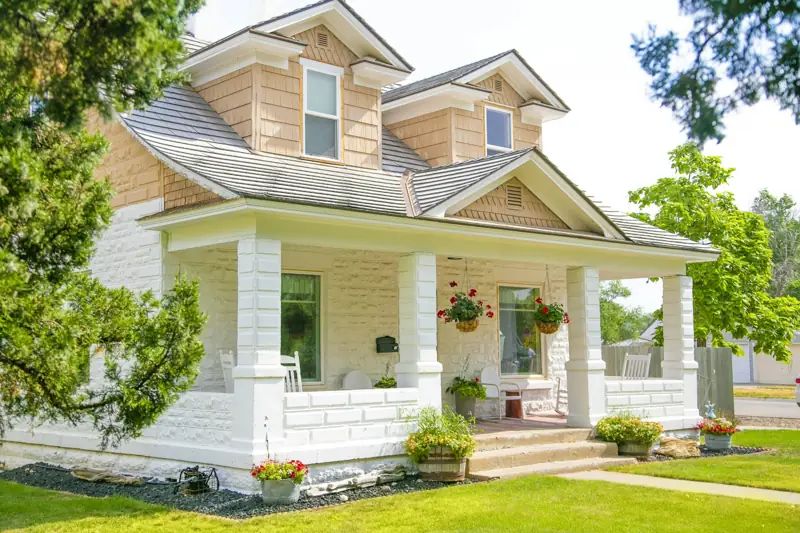
Photo: Blue two-story home with a front walkway and palm trees by Sean Foster (Unsplash License).
Your next step
Put your biggest investment to work for you
Tell us a little about the home. A reverse mortgage specialist will walk you — and your family, if you like — through what you could qualify for, what it costs, and whether it’s the right fit. No pressure, no obligation.
- No monthly mortgage payment required*
- Stay in the home you love
- Non-recourse FHA-insured HECM options
- Adult children welcome on every call
*You must still pay property taxes, homeowners insurance, HOA dues and maintain the home.
Prefer to run the numbers first? Try the reverse mortgage calculator →Important disclosures
Mortgages+ is an independent marketing and education platform. We are not a lender, do not make loans, and are not affiliated with or endorsed by the U.S. Department of Housing and Urban Development (HUD), the Federal Housing Administration (FHA) or any government agency. Mortgages+ may receive compensation from some companies featured on this site. This may affect which companies appear and where. Information on this page is general education, not financial, legal or tax advice. Estimates are illustrative; actual loan amounts, rates and costs depend on the lender, the appraisal, current rates, HUD rules and underwriting. A reverse mortgage is a loan: interest and fees are added to the balance each month, the balance grows over time, and equity declines. Borrowers must live in the home as their principal residence, keep paying property taxes, homeowners insurance and HOA dues, and maintain the home, or the loan may become due and the home may be subject to foreclosure. HECM borrowers must complete counseling with an independent HUD-approved counselor. Consult a tax adviser or benefits counselor about how a reverse mortgage may affect taxes or means-tested benefits such as Medicaid or SSI.