Reverse mortgage guide · HECM for Purchase
Reverse Mortgage for Home Purchase (HECM for Purchase)
A HECM for Purchase lets buyers 62+ buy a new home with a reverse mortgage and a down payment from their own funds, with no required monthly mortgage payment afterward.
- Sourced from HUD, CFPB, FTC & NCOA
- 2026 FHA limit: $1,249,125
- No cost · No obligation · No credit check
Most people think of a reverse mortgage as something you take out on the home you already own. The HECM for Purchase, sometimes called H4P, lets you use one to buy your next home instead. It combines the purchase and the reverse mortgage into a single closing, which can make downsizing or relocating more affordable.
Key takeaways
- HECM for Purchase buys a new principal residence and sets up the reverse mortgage in one transaction, with one set of closing costs.
- You pay a down payment from your own funds, such as savings or the sale of your current home; it cannot be borrowed.
- You must move in within 60 days of closing, and the usual HECM rules apply: age 62+, counseling and a financial assessment.
- There is no required monthly mortgage payment, but property taxes, insurance, HOA dues and upkeep continue.
- The three-day right to cancel that applies to most reverse mortgages does not apply to purchase loans.
What is a HECM for Purchase?
A HECM for Purchase is an FHA-insured reverse mortgage used to buy a new primary home. The reverse mortgage covers part of the price, you cover the rest with your own money, and you make no monthly mortgage payments afterward.
It follows the same rules as any Home Equity Conversion Mortgage (HUD). The difference is timing: instead of buying a home with a traditional mortgage or cash and then taking out a reverse mortgage later, everything happens at one closing. That avoids paying two sets of closing costs. If reverse mortgages are new to you, start with our guide to reverse mortgages and how a reverse mortgage works.
Like any HECM, the loan does not need to be repaid until the last borrower dies, sells, or permanently moves out, or fails to meet the loan obligations. The balance grows over time as interest and mortgage insurance are added, so the equity you hold in the new home shrinks over the years (CFPB).
How does a HECM for Purchase work?
The lender calculates a principal limit from the youngest borrower’s age, interest rates and the home’s price or appraised value. You pay the difference between the price plus costs and that principal limit as your down payment.
For a purchase, the maximum claim amount (MCA) is the lesser of the sale price, the appraised value, or the 2026 HECM limit of $1,249,125 (HUD). The lender multiplies the MCA by a principal limit factor from HUD’s tables, which depends on the youngest borrower’s age and the expected interest rate (FHA). Older borrowers and lower expected rates get a higher factor, which means a smaller down payment.
The upfront FHA premium (2% of the MCA), origination fee and closing costs are usually financed from that principal limit. Whatever is left of the purchase price, plus those costs, is your down payment. Read more about the fees on our costs and fees page.
Where the down payment can come from
The down payment must come from your own funds, such as savings, investments or proceeds from selling your current home. It cannot be borrowed, and seller concessions and seller-paid buyer costs are restricted.
How much down payment do you need for a HECM for Purchase?
It depends on your age, interest rates and the home’s price. In the illustrative example below, a 70-year-old buying a $400,000 home would need roughly $262,000 down, and an 80-year-old roughly $230,000.
This example uses only HUD’s published formula and roughly rounded factors from HUD’s 2017 tables at a 6.5% expected rate (about 0.39 at age 70 and 0.47 at age 80). It assumes a maximum origination fee and $4,000 of third-party costs. Real quotes will differ with rates, lender fees and your state.
| Item | Youngest buyer age 70 | Youngest buyer age 80 |
|---|---|---|
| Purchase price (= MCA) | $400,000 | $400,000 |
| Approximate principal limit factor | 0.39 | 0.47 |
| Principal limit (MCA × factor) | $156,000 | $188,000 |
| Upfront MIP (2% of MCA) | $8,000 | $8,000 |
| Origination fee (2% of $200,000 + 1% of $200,000) | $6,000 | $6,000 |
| Assumed third-party closing costs | $4,000 | $4,000 |
| Price plus costs | $418,000 | $418,000 |
| Approximate down payment from your funds | $262,000 | $230,000 |
In the age-70 example, a couple who sells their current home for enough to cover the down payment would own a $400,000 home with no monthly mortgage payment, while keeping any extra sale proceeds in savings. Try your own numbers with the reverse mortgage calculator, and see how much you can get for more on principal limit factors.
Who is a HECM for Purchase good for?
It tends to suit buyers 62 and older who have substantial savings or home-sale proceeds, plan to stay in the new home for many years, and want to keep more cash on hand than an all-cash purchase would allow.
- Downsizing: selling a larger family home and buying something smaller without spending all of the sale proceeds.
- Moving closer to family: relocating near children or grandchildren while keeping a cash cushion for the move and new expenses.
- Buying a single-level or more accessible home: fewer stairs, wider doors and a walk-in shower can make aging in place realistic.
- Avoiding a new monthly mortgage payment: compared with a traditional mortgage, there is no required monthly principal and interest payment.
When it may not fit
If you expect to move again within a few years, the upfront costs may outweigh the benefit. And if you cannot comfortably keep paying property taxes, insurance, HOA dues and upkeep, the loan can become due. Compare alternatives on our pros and cons page.
What are the HECM for Purchase requirements?
The youngest borrower must be 62 or older, you must complete HUD-approved counseling, pass a financial assessment, buy an FHA-eligible home, and move in within 60 days of closing.
| Feature | HECM for Purchase | Standard HECM |
|---|---|---|
| Age | Youngest borrower 62+ | Youngest borrower 62+ |
| Counseling | Required before applying | Required before applying |
| Financial assessment | Yes | Yes |
| Maximum claim amount | Lesser of price, appraised value or $1,249,125 (2026) | Lesser of appraised value or $1,249,125 (2026) |
| Your cash at closing | Down payment from your own funds | Usually none, unless needed to pay off a large existing mortgage |
| Move-in deadline | Within 60 days of closing | Already living there |
| 3-day right of rescission | No | Yes, for most loans |
The home must meet FHA property standards and be an eligible type, such as a single-family home, a 2–4 unit property where you live in one unit, a HUD-approved condominium, or a manufactured home meeting FHA requirements. Co-ops are generally not eligible. Full details are on our eligibility requirements page.
No three-day cancellation on a purchase
Most reverse mortgages give you three business days after closing to cancel. That right does not apply to a HECM for Purchase, so do your thinking before closing day, ideally with family present (FTC).
How do you buy a home with a reverse mortgage?
Complete counseling, choose an FHA-approved lender, get your estimated down payment, shop for an eligible home, close in one transaction, and move in within 60 days.
- Step 1
Run your numbers
Use the reverse mortgage calculator to estimate a principal limit for your age and target price.
- Step 2
Complete HECM counseling
Meet with a HUD-approved counselor, who will explain the purchase rules. See HECM counseling.
- Step 3
Choose a lender and get a pre-approval
Work with an FHA-approved lender that offers HECM for Purchase, and confirm your estimated down payment in writing.
- Step 4
Tell your real estate agent
Your agent should know you are using a HECM for Purchase so offers and contract terms fit the program.
- Step 5
Find an eligible home
Confirm the home type qualifies and expect an FHA appraisal that checks property standards.
- Step 6
Close and move in
Bring your down payment to the single closing, then move in within 60 days.
Mortgages+ is an education and marketing platform, not a lender, and is not affiliated with HUD or FHA. Figures are estimates for education; actual terms come from a licensed lender after counseling, appraisal and underwriting.
Frequently asked questions
Can you use a reverse mortgage to buy a house?
Yes. A HECM for Purchase lets borrowers 62 and older buy a new principal residence with a reverse mortgage and a down payment from their own funds, in one closing.
How much do you need to put down on a HECM for Purchase?
The down payment is the purchase price plus costs minus your principal limit, which depends on your age and interest rates. Older buyers generally need a smaller down payment than younger buyers.
Can the down payment be borrowed?
No. The down payment must come from your own funds, such as savings or the sale of your previous home. Seller concessions are restricted.
How soon do I have to move in after a HECM for Purchase?
You must occupy the new home as your principal residence within 60 days of closing.
Can I cancel a HECM for Purchase after closing?
No. The three-day right of rescission that applies to most reverse mortgages does not apply to purchase transactions.
Buying your next home? Compare a HECM for Purchase with a downsizing mortgage pre-approval.
Keep reading
 How Much Can I Get From a Reverse Mortgage?Most first-time HECM borrowers can access roughly 30% to 55% of their home’s value before costs, depending on the youngest borrower’s age and current interest rates.
 Reverse Mortgage Eligibility RequirementsTo qualify for a HECM reverse mortgage, the youngest borrower must be 62+, live in the home, have sizable equity, be current on federal debt and complete counseling.
 Reverse Mortgage Costs and Fees, ExplainedHECM costs include a 2% upfront FHA premium, a 0.5% annual premium, an origination fee capped at $6,000, closing costs and interest, mostly paid from loan proceeds.
 HECM Counseling: What to Expect and How to PrepareHECM counseling is a required session with an independent HUD-approved counselor before you apply. It usually costs about $125 to $200 and can be by phone or in person.
Sources
Content reviewed November 18, 2026 against these authoritative sources.
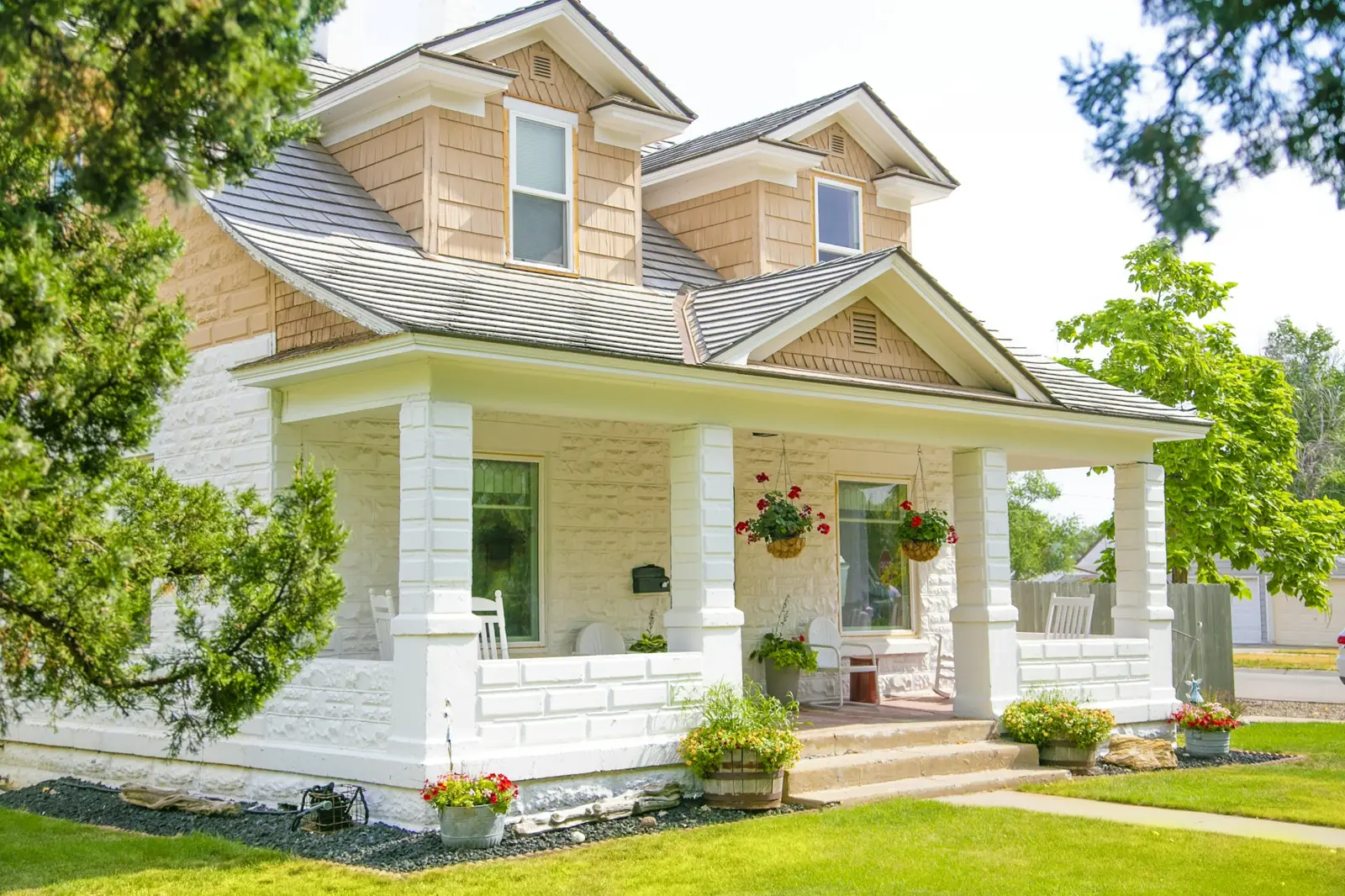
Photo: Craftsman-style family home with a covered front porch by Ian MacDonald (Unsplash License).
Your next step
Put your biggest investment to work for you
Tell us a little about the home. A reverse mortgage specialist will walk you — and your family, if you like — through what you could qualify for, what it costs, and whether it’s the right fit. No pressure, no obligation.
- No monthly mortgage payment required*
- Stay in the home you love
- Non-recourse FHA-insured HECM options
- Adult children welcome on every call
*You must still pay property taxes, homeowners insurance, HOA dues and maintain the home.
Prefer to run the numbers first? Try the reverse mortgage calculator →Important disclosures
Mortgages+ is an independent marketing and education platform. We are not a lender, do not make loans, and are not affiliated with or endorsed by the U.S. Department of Housing and Urban Development (HUD), the Federal Housing Administration (FHA) or any government agency. Mortgages+ may receive compensation from some companies featured on this site. This may affect which companies appear and where. Information on this page is general education, not financial, legal or tax advice. Estimates are illustrative; actual loan amounts, rates and costs depend on the lender, the appraisal, current rates, HUD rules and underwriting. A reverse mortgage is a loan: interest and fees are added to the balance each month, the balance grows over time, and equity declines. Borrowers must live in the home as their principal residence, keep paying property taxes, homeowners insurance and HOA dues, and maintain the home, or the loan may become due and the home may be subject to foreclosure. HECM borrowers must complete counseling with an independent HUD-approved counselor. Consult a tax adviser or benefits counselor about how a reverse mortgage may affect taxes or means-tested benefits such as Medicaid or SSI.