For roofing, hvac and home improvement contractors
Roofing, HVAC and Remodeling Leads Born at the Mortgage Table
Mortgages+ sells consented, verified-phone leads from homeowners who just bought, refinanced or tapped equity and named a roof, HVAC or remodel job. Bids start at $25.
Most contractor leads arrive with no context: a name, a phone number and a vague wish. A homeowner who comes through a mortgage moment is different. They often hold an inspection report that lists the exact defect, a closing date that sets the clock, and in many cases a HELOC or cash-out refinance that already answers the question of how the job gets paid for. This page explains how those leads are created, when to show up, how bidding works, and the licensing and financing rules that keep the work clean.
Key takeaways
- Leads come from homeowners at a real mortgage event: a purchase with inspection findings, a refinance, or a home equity draw.
- Each lead carries a project type (roof, heating and cooling, kitchen or bath, other), a ZIP, a timeline and a timestamped TCPA consent record.
- You set categories, ZIP codes, a daily cap and a bid per lead from $25; the top funded bid wins each lead exclusively and only winners are charged.
- In-home sales trigger the FTC Cooling-Off Rule, and financed jobs bring Truth in Lending disclosures; state licensing applies to every bid.
- Speed matters most: call within five minutes, text a confirmation, and book an in-home or video estimate on the first contact.
When do roofing, hvac & home improvement leads happen around a mortgage?
Every lead on Mortgages+ starts at a mortgage moment: a purchase, a refinance or an equity decision. These are the windows when homeowners need you most.
- 1
Under contract, inspection period
Days 1 to 10 after the offer is accepted
Fast written repair estimates for roof, HVAC or electrical findings to negotiate a credit
- 2
Closing and move-in
First 90 days of ownership
Must-fix items, system replacements, paint and flooring before move-in
- 3
Cash-out refinance funds
1 to 8 weeks after closing
Larger planned projects with a set budget
- 4
HELOC opened
Draw period, usually the first months after approval
Phased remodels drawn as work progresses
- 5
Insurance renewal on an older roof
60 to 90 days before renewal
Roof inspection, repair or replacement to keep coverage
- 6
Preparing to sell
1 to 3 months before listing
Pre-listing repairs that survive the buyer's inspection
Why do mortgage-moment leads close better for contractors?
Because the need, the timing and often the funding are already known. A buyer with an inspection report that flags a 22-year-old roof, or a homeowner closing a HELOC to replace a failing furnace, is past the 'someday' stage and is comparing contractors, not ideas.
Contractors live and die by intent. A shared lead from a generic 'free quote' form might be a renter, a tire-kicker or someone who filled out five forms on a Sunday night. A Mortgages+ lead starts somewhere more concrete: a person who used a mortgage calculator, a pre-approval flow, an equity guide or our guide to financing home improvements, then typed their name, ZIP, email and mobile, received one text, tapped 'Get Code' (that tap is the stored consent) and entered the six-digit code. They then answered a timeline question, a home situation question and 'What's the project?' with roof, heating and cooling, kitchen or bath, or something else.
The mortgage event explains the money. A new buyer may be rolling repairs into a renovation loan. A refinancer may be pulling cash out. An existing owner may be opening a line of credit; our page on how a home equity line works is where many of those households start. When the funding source is known, your estimate conversation shifts from 'can we afford this' to 'which option and when'.
What a lead record contains
Name, mobile (verified by code), email, ZIP, project type, timeline, home situation, the exact consent language shown, consent timestamp, IP address and user agent. You never receive a lead that did not complete the text verification.
Compare that with the usual sources. Door hangers and yard signs reach whoever drives by. Generic quote sites often resell the same form to many contractors within seconds. Storm canvassers create leads by knocking, which brings Cooling-Off Rule paperwork and reputational risk. Mortgage-moment leads are narrower: fewer in number, tied to a dated event and limited to people who asked for contact on a verified phone. For an estimating team that usually means fewer wasted drives and more first conversations that start with a specific defect and a funding source rather than 'just looking'. It does not mean every lead will buy. It means your follow-up starts further down the funnel.
When do homeowners need a roofer, HVAC company or remodeler?
Demand clusters around four windows: the inspection period before closing, the first 90 days after move-in, the weeks after a refinance or HELOC funds, and the run-up to a sale when sellers fix what a buyer's inspector will flag.
Each window asks for a different pitch. During the inspection period, the buyer needs a fast written estimate the agent can use to negotiate a credit. After move-in, the owner wants the 'must fix' list handled before winter or summer. After an equity draw, the owner wants the full project designed and scheduled. Before a sale, the seller wants the cheapest code-compliant fix that will survive a buyer's inspection. The timing table on this page lays it out; build a script for each.
- Inspection window (often 7 to 10 days in a purchase contract): repair estimates in writing within 48 hours win the job and the referral from the agent.
- First-year fixes: roofs nearing end of life, HVAC systems past 15 years, water heaters, electrical panels and windows top the list.
- Equity-funded projects: kitchens, baths, additions and full roof or HVAC replacements, usually with a fixed budget the lender has already approved.
- Insurance-driven work: an insurer may require a roof replacement or decline renewal on an older roof; see our homeowner page on insurance when buying a home.
How do the three Mortgages+ offers work for a contractor?
Buy individual leads in real time from $25, hire Mortgages+ to run dedicated campaigns for your company on a monthly retainer, or become a founding partner and earn your partnership fee back through a 30% discount on leads.
| Your business | Best fit | Why |
|---|---|---|
| Owner-operator, 1 to 3 crews | Real-Time Leads | Pay only for exclusive leads you win, cap daily volume to what your calendar can absorb, pause in peak season. |
| Regional roofer or HVAC firm with a call center | Real-Time Leads plus a Joint Venture | Leads fill the pipeline while dedicated campaigns build your brand in target ZIPs. |
| Multi-trade remodeler or franchise group | Partner | Featured placement, co-marketing kits and discounted leads across many territories. |
Home improvement contracting is not a RESPA settlement service when it is sold directly to a homeowner, so a Joint Venture can include a success fee on closed jobs (less the retainer already paid) where agreed in writing. If your company also arranges financing or works on jobs paid at a real estate closing, talk to counsel before tying any payment to the loan. Full pricing details live on the Mortgages+ partnership offers page.
Two companion guides go deeper: what contractor leads cost per booked job walks through the math, and marketing ideas for roofers and HVAC pros covers campaigns that pair well with leads.
01 · Bid from $25 per lead
Real-Time Leads
Bid from $25 on homeowners who named a roof, HVAC, remodel or other project in your ZIPs, with daily caps sized to your estimators' calendars.
Add money & place a bid02 · We market for you
Joint Ventures
A monthly retainer funds dedicated campaigns for your company: seasonal roof and HVAC pushes, equity-funded remodel landing pages and email to new homeowners, with monthly reporting. A success fee on closed jobs (less retainer paid) may apply.
Discuss a joint venture03 · Own a piece of the platform
Partners
Founding partners pay a one-time fee for a stake in the platform's growth, earn it back through a 30% discount on leads, and get featured placement plus co-marketing kits for social and email.
Become a partnerAny success-fee or revenue-share arrangement that requires state licensing, regulatory approval or a specific legal structure (for example, settlement-service providers covered by RESPA) must be handled independently by the partner, or the licensing, contracting and legal work needed to make it compliant will be billed in addition to the program fees.
How does bidding on home improvement leads work?
You fund a prepaid wallet of at least four times your bid, choose project categories and ZIP codes, set a daily cap and a bid per lead from $25. The highest funded bid in each ZIP wins the lead exclusively; it arrives within seconds by dashboard and email, and your wallet is charged your bid.
- Step 1
Create your account
Add your license number, service area and the project types you install.
- Step 2
Fund your balance
Prepay what you are comfortable spending, at least four times your bid; nothing is charged until you win a lead.
- Step 3
Target and cap
Pick ZIP codes or states, choose roof, HVAC, remodel or other, and set a daily cap so you never get more leads than your estimators can call.
- Step 4
Bid per lead
Bid from $25 in $1 steps. Each request is auctioned once per category, and the highest funded bid for the ZIP wins it exclusively; ties go to the earliest bid.
- Step 5
Work the lead
Each lead lands in your dashboard and inbox the moment it is verified. Pause, top up or change targeting any time.
Bidding, step by step
- Step 1
Create your account
Tell us your business, licenses and service area. It takes about three minutes.
- Step 2
Add money
Fund your wallet. To place a bid it needs at least 4 × the bid; you only ever spend what you load.
- Step 3
Choose category and ZIPs
Pick home improvement leads, the ZIP codes or states you serve and a daily cap.
- Step 4
Place a bid from $25
Bid in $1 steps. The highest funded bid for the category and ZIP wins each lead; ties go to the earliest bid.
- Step 5
Win leads exclusively
Each consented, phone-verified request goes to one partner per category, by email and in your portal within seconds.
- Step 6
Tune as you go
Raise, lower or pause bids and change ZIP codes. You pay your bid only for leads you win.
A bidding example (illustrative)
Illustrative: a two-crew roofer in Tulsa targets 14 ZIP codes, roof only, with a $65 bid and a cap of 4 leads a day. It keeps at least $260 (four times the bid) in its wallet, topping up as wins are charged. Over a month it wins 52 exclusive leads at $65 each, a total of $3,380. If 18 become estimates and 6 sign at an average of $14,000, the lead cost is about $563 per signed roof; your own numbers will differ.
What compliance rules apply to contractor leads?
State contractor licensing, the FTC Cooling-Off Rule for sales made in the home, Truth in Lending disclosures and rescission rights on financed jobs secured by the home, and TCPA consent for calls and texts.
- Licensing: most states license roofing, HVAC and general contractors, and many require a home improvement registration plus specific contract terms. Only bid ZIPs where you hold the license.
- FTC Cooling-Off Rule: a sale of $25 or more made at the buyer's home generally must include a written notice of the buyer's right to cancel within three business days (16 CFR Part 429). Many states add their own home-solicitation rules.
- Financing: if you arrange credit, the lender's Truth in Lending disclosures apply, and when the loan is secured by the customer's principal dwelling the customer usually has a three-business-day right to rescind (12 CFR 1026.23). Do not start work in a way that pressures the owner during that window.
- TCPA: the consent attached to each lead covers contact about the request the homeowner made (47 U.S.C. 227). Honor any opt-out at once, and keep the consent record with the file.
Storm work and deposits
Several states cap deposits or restrict contracts contingent on insurance claims after storms. Check your state's rules before you sign an insurance-funded roof.
How should a contractor work these leads to book estimates?
Call within five minutes, reference the project the homeowner named, offer two appointment times, and confirm by text. Follow up on days 1, 3, 7 and 14, and send the written estimate within 24 hours of the visit.
Opening script: 'Hi Dana, this is Marco with Ridgeline Roofing. You asked about a roof estimate through Mortgages+ a few minutes ago. Are you in the inspection period or already moved in?' That second question tells you whether to promise a 48-hour written estimate for negotiation or a full replacement proposal.
| Day | Touch | Goal |
|---|---|---|
| 0 (within 5 minutes) | Call, then text if no answer | Book the estimate |
| 1 | Call plus a short text with your license number and reviews link | Build trust |
| 3 | Email a one-page 'what to expect' and financing options overview | Answer the money question |
| 7 | Call | Re-offer two time slots |
| 14 | Final text, then mark as nurture | Close the loop politely |
Price the financing conversation honestly. Show cash, the homeowner's own equity line, and any contractor financing side by side, and let the homeowner choose. Homeowners who are still weighing a cash-out refinance can run the numbers in the cash-out refinance payment and break-even tool.
Compliance for roofing, hvac & home improvement partners
State contractor licensing, FTC Cooling-Off Rule, TILA for financed jobs and TCPA consent. Every Mortgages+ lead carries the consumer’s timestamped “Get Code” consent, the exact consent wording, IP and device. You pay for the lead itself, never for a closed transaction or a referral.
Roofing, HVAC & home improvement leads: frequently asked questions
Are Mortgages+ home improvement leads exclusive?
Yes. Each request is auctioned once per category, and the highest funded bid for that ZIP wins it exclusively (ties go to the earliest bid). No other contractor in that project category receives the same lead through Mortgages+.
What is the minimum bid for contractor leads?
The minimum bid is $25 per lead, raised in $1 steps, and your wallet must hold at least four times your bid. When several contractors target the same ZIP code and project type, the highest funded bid wins the lead exclusively.
Can I target only roofing or only HVAC?
Yes. Choose the project types you install (roof, heating and cooling, kitchen or bath, or other) and the ZIP codes or states you are licensed to serve.
How is consent captured?
The homeowner enters their mobile number, receives one text, taps 'Get Code' and types the six-digit code back. The tap is stored as the TCPA consent with the exact wording, timestamp, IP address and user agent.
Do I pay for leads I never contact?
Yes. You pay your bid for each lead you win that matches your targeting. Use daily caps and pause controls so you only receive what your team can call quickly.
Does the Cooling-Off Rule apply to my in-home estimates?
If a sale of $25 or more is made at the customer's home, the FTC rule generally requires a three-day cancellation notice. Emergency repairs and some other situations have exceptions, and state law may add more.
Can I bid on a whole state instead of individual ZIP codes?
Yes. Choose a whole state when you place a bid and it covers every ZIP code in that state, including ZIPs added later; you can remove individual ZIPs you don't serve. ZIP-level and state-level bids compete on price alone, and ties go to the earliest bid.
Who handles licensing and legal work for success fees or revenue sharing?
The partner does. Any success-fee or revenue-share arrangement that requires state licensing, regulatory approval or a specific legal structure (for example, settlement-service providers covered by RESPA) must be handled independently by the partner, or the licensing, contracting and legal work needed to make it compliant will be billed in addition to the program fees. Settlement-service providers such as lenders, title and escrow companies and real estate agents pay a flat marketing fee at fair market value, never a success fee tied to closings, and Real-Time Leads are always priced per lead delivered.
Many of these homeowners are still lining up the money for the job. Point them to a renovation-ready equity or refinance pre-approval so the estimate and the funding move together.
Go deeper on home improvement leads
 What Home Improvement Leads Cost Per Signed JobContractor leads cost what you bid, from $25 each on Mortgages+. The number that matters is cost per signed job: bid divided by your contact, estimate and close rates.
 Marketing Ideas for Roofers, HVAC and Remodeling ContractorsGood contractor marketing meets homeowners at three moments: the inspection report, the first year after move-in and the day equity funds. Here is how to be there.
Where these leads come from
See the page your future customers read
Homeowners find you through How to Pay for a New Roof, HVAC or Remodel, then request matched help with a verified phone and recorded consent.
Sources
Content reviewed November 18, 2026 against these authoritative sources.
- 1.FTC (eCFR): 16 CFR Part 429: Rule concerning cooling-off period for sales made at homes
- 2.CFPB (eCFR): 12 CFR 1026.23: Right of rescission (Regulation Z)
- 3.Cornell LII: 47 U.S.C. 227: Telephone Consumer Protection Act
- 4.CFPB: What you should know about home equity lines of credit (PDF)
- 5.NAHB: National Association of Home Builders (remodeling and contractor resources)
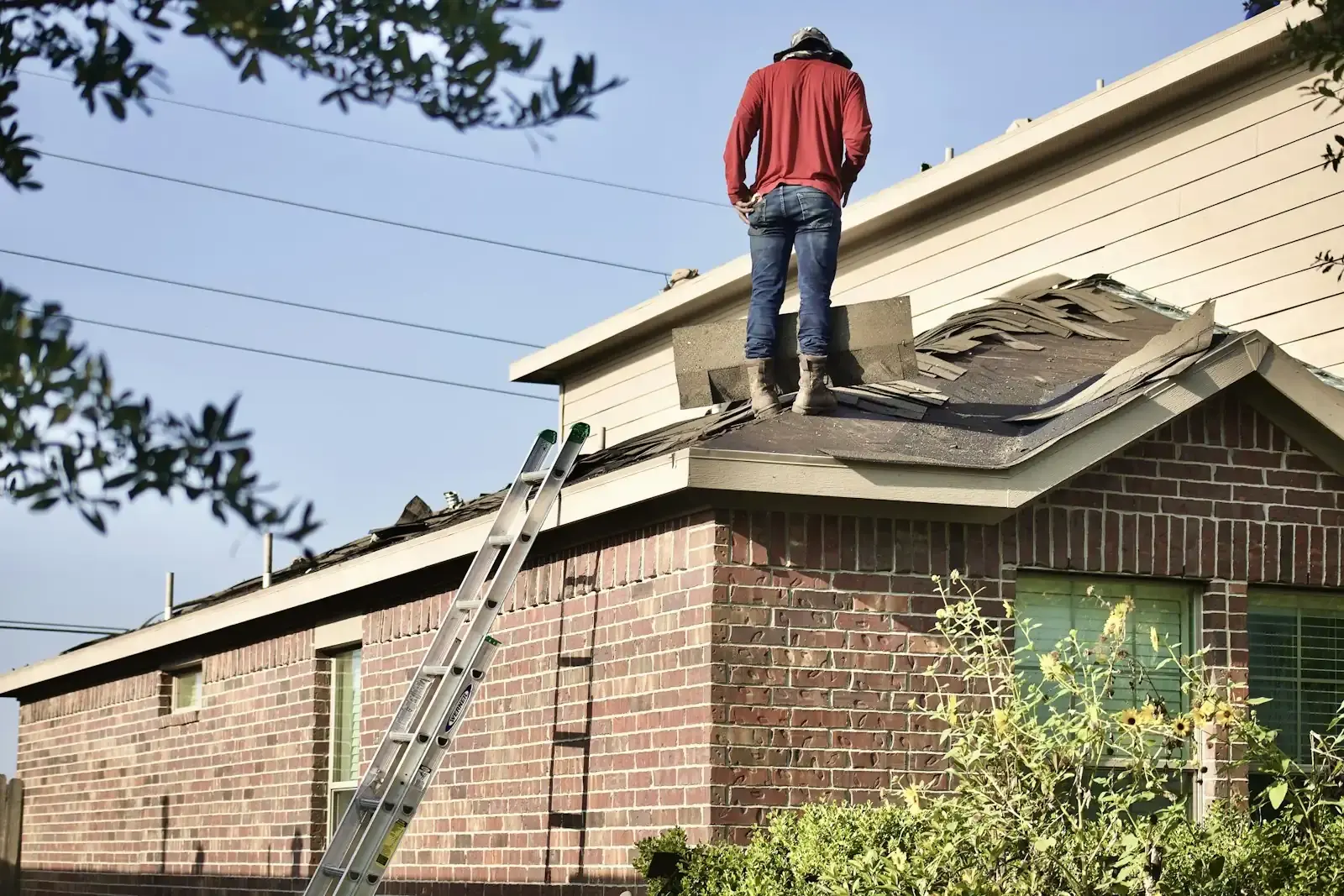
Photo: A roofer standing on a house roof by Zohair Mirza on Unsplash (Unsplash License).

Mortgages+ marketplace
Ready for home improvement leads from the mortgage moment?
Create your account, add money and set your first bid in minutes. Or talk to us about a joint venture or a founding partnership.
Already a partner? Sign in to the partner portal. Prefer to talk first? See partnerships, joint ventures and investor options.